AI Readiness Assessment

From Existing Infrastructure to AI-Ready:
A Clear, Engineered Path Forward

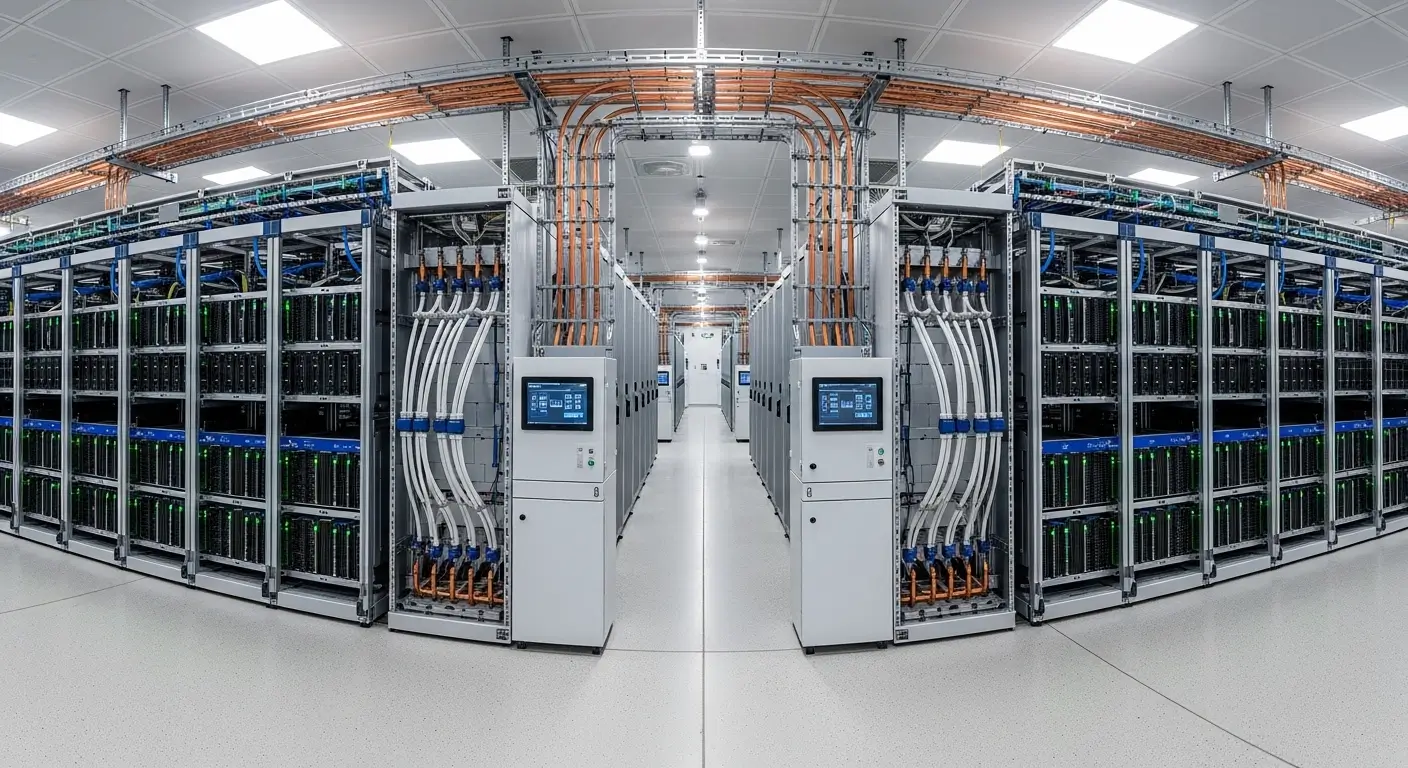
AI Data Center showing rolls of server racks in a modern AI data center

Unlocking AI Capability in Your Existing Facility:
Independent Assessment for Data Centre Operators and Owners

The Case for Assessment Before Investment

AI has moved from experimentation to production. Internal teams now rely on inference-based applications — intelligent agents, document analysis, predictive systems, and AI-powered services — that place fundamentally different demands on data centre infrastructure than traditional IT workloads. At the same time, cloud inference costs are rising and data sovereignty requirements are tightening, making on-premises AI capability an increasingly strategic asset.

Most existing facilities were not designed for these demands. But that does not mean they cannot support them. The infrastructure gap between where a facility stands today and where it needs to be for AI workloads is specific and measurable — and for the majority of small and medium data centres, it is a solvable engineering problem, not a reason to rebuild.

Mission Critical Engineers (MCE) provides independent, engineering-focused AI Readiness Assessments specifically designed for existing data centres. Our assessments give operators and facility owners clarity on what their infrastructure can support today, what needs to change, and a phased roadmap to get there — without disrupting existing operations.

Scope of Assessment: Systems and Areas Evaluated

A facility’s readiness for AI workloads is determined across five interconnected systems. MCE evaluates all of them.

  • Distribution architecture capacity and redundancy at the rack level
  • Switchgear, UPS, and PDU configuration and headroom
  • Utility feed capacity and ability to support increased density
  • Circuit layout and power delivery efficiency to target zones
  • Existing cooling plant capacity and chilled water infrastructure
  • Airflow architecture and containment effectiveness at target densities
  • Feasibility of liquid cooling integration — approach determined by workload and facility conditions
  • Secondary coolant loop routing, space, and connection points
  • Floor load ratings against high-density compute and cooling equipment requirements
  • Raised access floor systems, structural slab, and load path analysis
  • Physical space feasibility for cooling infrastructure integration
  • Seismic and physical constraint review where applicable
  • Fibre counts, conduit fill, and overhead pathway capacity
  • Main distribution and intermediate distribution area design against AI cluster requirements
  • High-speed interconnect pathway feasibility
  • Cable management and physical infrastructure capacity
  • PDU-level metering coverage and granularity
  • Thermal monitoring, sensor density, and alerting capability
  • Leak detection and coolant monitoring readiness
  • Building automation system integration and controls infrastructure

Analytical Focus: Key Evaluation Areas

Mapping of your specific AI objectives — inference applications, fine-tuned models, high-volume deployment — against your facility’s realistic infrastructure capabilities. The assessment is calibrated to your workload, not to an industry benchmark that may not apply.

Precise determination of the power and cooling density gap between your facility’s current design parameters and your target AI workload requirements. Each system is evaluated independently and as part of the integrated facility.

Identification of the specific systems, zones, or components that represent the binding constraints on AI capability — distinguishing true hard stops from manageable upgrades. Not every system needs to change; knowing which ones do is the value of the assessment.

Evaluation of how existing redundancy configurations perform under increased density conditions, and where additional resilience measures are required to maintain uptime commitments during and after the upgrade.

Analysis of the facility’s ability to support a ring-fenced AI zone or phased upgrade approach — allowing AI workloads to be deployed in a defined area while existing operations continue uninterrupted on the remainder of the floor.

Development of realistic cost ranges and risk profiles for each upgrade path, sequenced by impact, feasibility, and operational disruption — giving operators the information needed to make informed investment decisions before committing capital.

Methodology: The Assessment Process

A detailed examination of all relevant design drawings, single-line diagrams, mechanical and electrical specifications, equipment schedules, and available operational data. Remote review is available for initial phases where site access is not yet confirmed.

Comprehensive on-site evaluation to verify physical conditions, equipment configuration, installed capacity, and operational practices against documented specifications. Discrepancies between as-built and as-designed conditions are identified and documented.

Engineering analysis of power distribution, cooling capacity, structural loading, and network infrastructure against target workload requirements. Failure scenario modelling and constraint identification are performed across all five systems.

Structured discussions with facility management, operations staff, and IT leadership to understand operational priorities, maintenance history, planned changes, and specific AI deployment objectives. Operational context is essential to a practical assessment.

Deliverables: Findings and Actionable Insights

A system-by-system engineering assessment of your facility’s current condition against the requirements of your target AI workload. Each system is evaluated, gaps are quantified, and constraints are clearly identified and categorized by severity. Written to engineering document standard — specific enough to hand directly to a contractor, MEP engineer, or internal capital planning team.

A sequenced upgrade plan with capital estimates, prioritized by impact and feasibility. Phases are designed to protect your existing operations — upgrades are staged so your facility continues running and your current users or tenants are not disrupted. The roadmap specifies what to upgrade first, what to defer, and where coordination with utilities or vendors is required.

For operators who wish to proceed directly from assessment to execution, MCE provides design review, contractor coordination, and validation support through the upgrade process. This engagement is scoped separately following delivery of the roadmap.

Who We Serve

  • Enterprise-owned data centres evaluating AI workload capability
  • Regional and mid-market colocation operators positioning for AI tenants
  • Managed service providers expanding into AI inference hosting
  • Facilities in the 500 kW – 8 MW range undergoing operational modernization

Get our free executive brief in our technical resource library! Please fill out the form below to download now.

Get the latest insights and updates — sign up for our newsletter!