
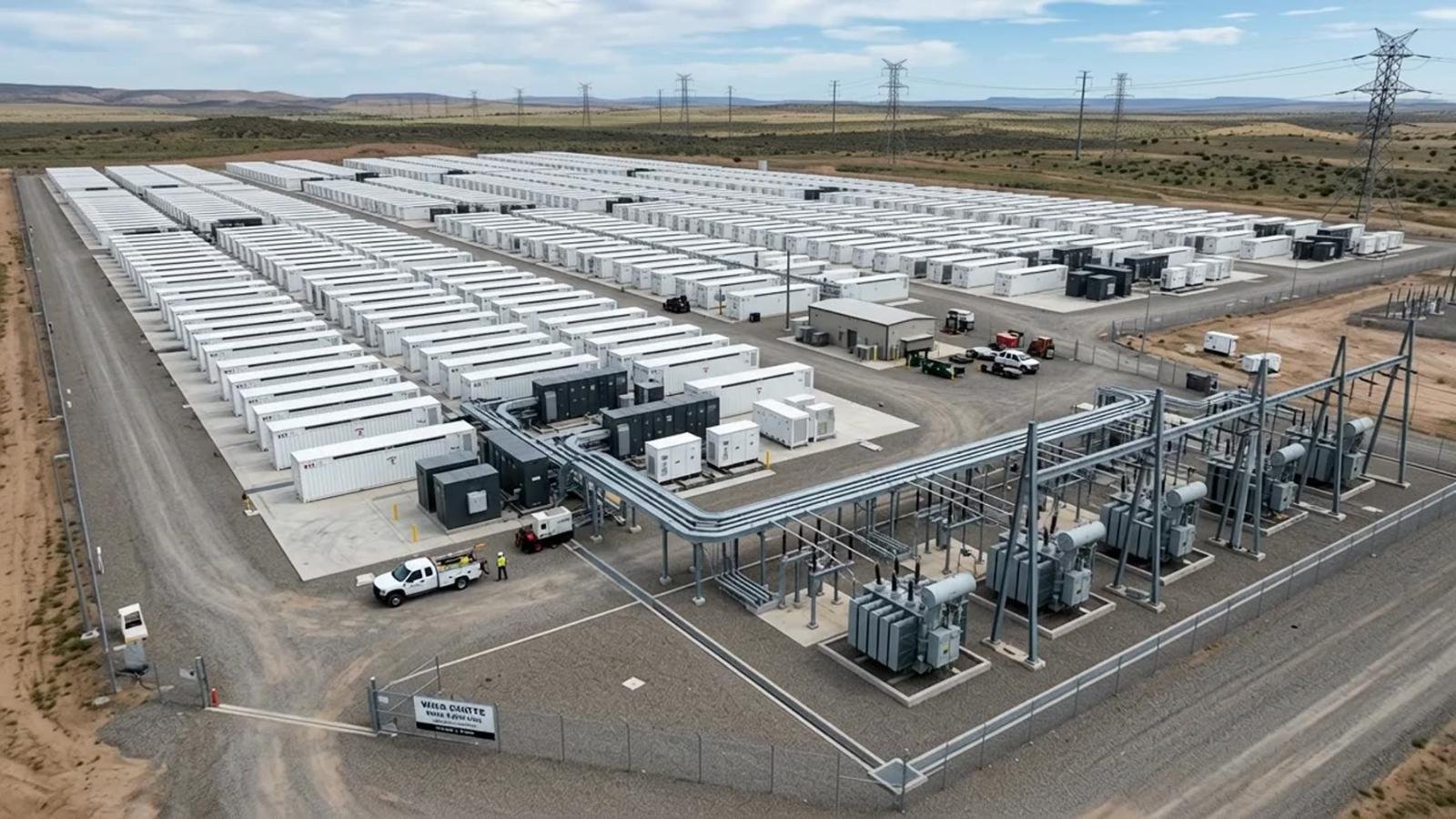
Owner's-side engineering across the life of a battery storage asset — from technology selection to operation, and independent investigation if something fails.
Every battery storage system arrives with a thick stack of documentation: test reports, certificates, datasheets, protection schemes, commissioning records. Almost all of it is produced by, or on behalf of, the party selling the system.
That documentation is not wrong. It is answering a different question than yours. A supplier's test report answers did this configuration pass this test. Your question is does the system I am actually buying, as it will actually be installed and operated here, satisfy the authority that must approve it, the lender that must finance it, and the insurer that must cover it.
The distance between those two questions is where BESS projects lose money — in redesign after an AHJ rejection, in retrofit after a failed commissioning, in disputed warranty claims, in premium loading, and occasionally in a loss. Independent, owner's-side engineering closes that distance while it is still cheap to close.
Owners engage us at whichever stage they are at. Earlier is cheaper — but there is useful work at every point, including after an incident.
Technical findings only matter if the people funding and covering the asset accept them. Several of our engagements exist specifically to produce that evidence.
Independent technical review supporting financing, drawdown, or acquisition of a project or portfolio.
Assessment mapped to what underwriters actually ask for, so risk is priced on evidence rather than on assumption.
Sustained owner's-side technical oversight across a project, rather than a single report.
Independent technical position where a supplier's performance or a non-conforming test result is contested.
Breadth is only useful if the depth is real. Across every stage above, these are the things we look at directly.
Our licensed team applies a proprietary risk-assessment methodology built specifically for battery fire and explosion risk across the asset life. You get a structured technical report with a prioritized gap register: every finding rated, tied to the standard or failure mode behind it, and paired with a recommendation — written to be handed directly to a lender, insurer, or AHJ.
No equipment, design, or construction conflicts. Our only obligation is to the owner and the asset's safety.
Licensed engineers plus certified fire and explosion investigators, across electrical, controls, and forensic disciplines.
Purpose-built for BESS risk, surfacing propagation, deflagration, and controls gaps a compliance review misses.
UL 9540A, NFPA 855, NFPA 68/69, IEC 62933 — the benchmarks lenders and insurers apply.
Prevention up front, forensic root cause if it fails. Both sides of the risk, one partner.
MCE does not design, build, or operate. Findings serve one interest: the owner's.
Independent · Canadian-registered · Serving battery-storage projects worldwide
MCE provides independent, owner's-side advisory and assessment. MCE does not design, build, operate, or act as engineer of record.